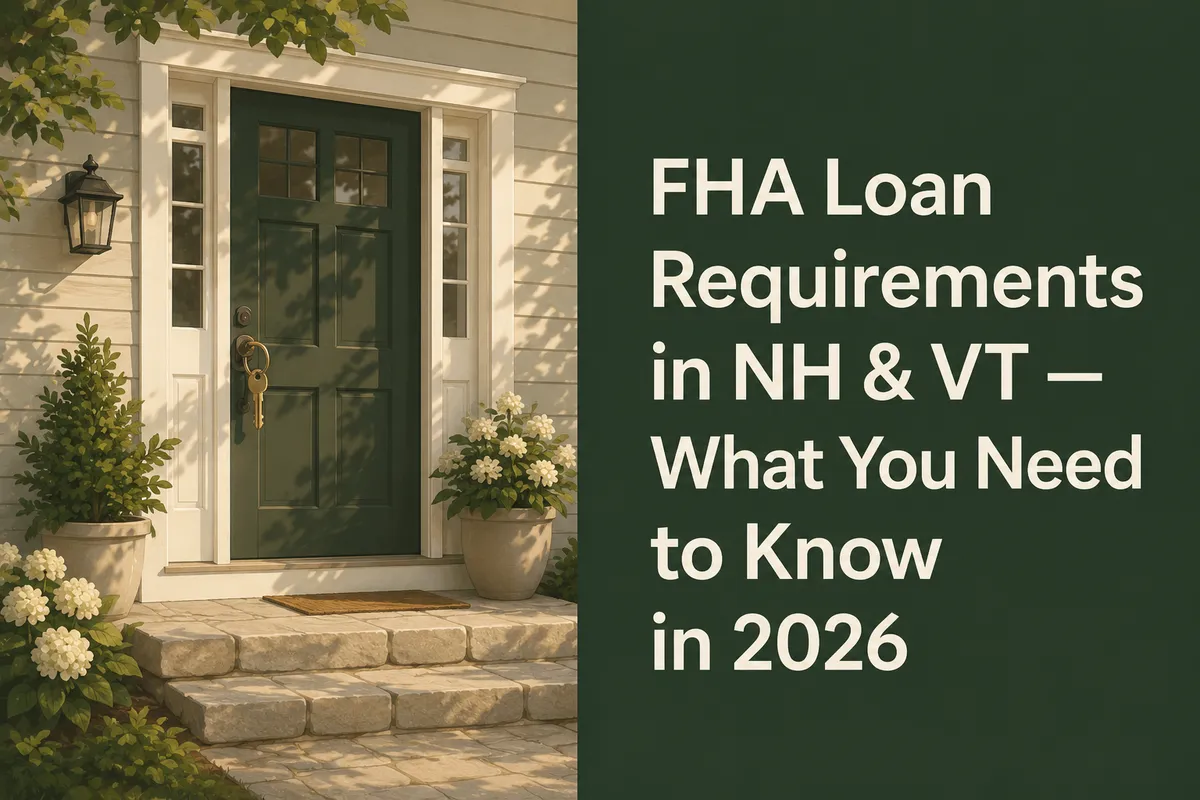
What Actually Qualifies You for an FHA Loan in NH or VT in 2026
By Derek Tsakiris | NMLS #1007898 | Licensed in NH, VT & ME
The short answer: Qualifying for an FHA loan comes down to four things: your credit score, your debts, the condition of the home, and living in it as your primary residence.
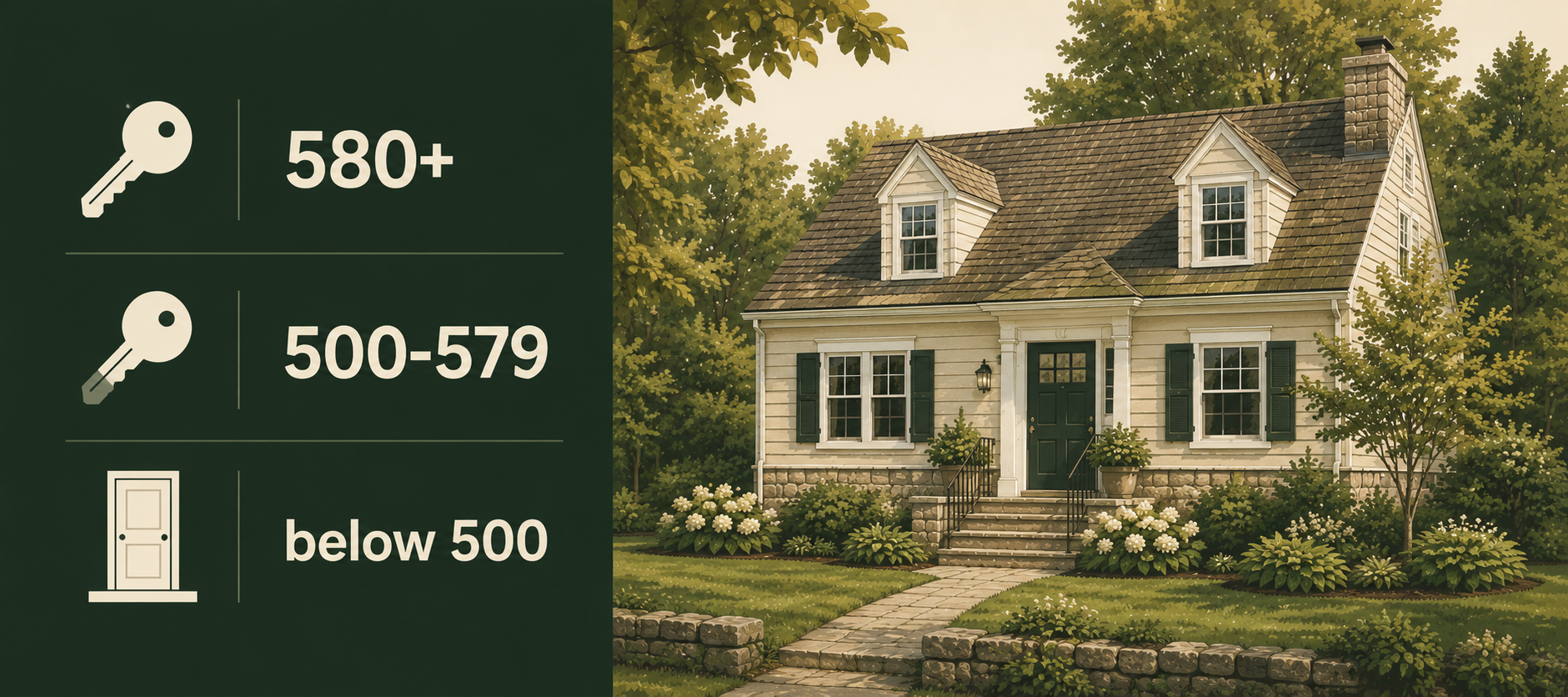
FHA's rule is 3.5% down with a credit score of 580 or higher, and 10% down with a score from 500 to 579.
There is a lot of outdated information floating around about FHA loans, and honestly, it is costing people. Buyers who could be in a home right now are sitting on the sidelines because they heard something that used to be true, or half-true, or just plain wrong.
So let's clear it up.
If you are looking at buying a home in the Upper Valley - Lebanon, Hanover, White River Junction, or anywhere across New Hampshire, Vermont, or Maine - here is exactly what qualifies you for an FHA loan in 2026.
What Credit Score Do You Need for an FHA Loan?
Most people think qualifying for an FHA loan comes down to a single number. It does not.
FHA uses a tiered credit score system, and where you land determines your down payment requirement, not your eligibility outright.
580 or above - You qualify for the minimum 3.5% down payment. This is the tier most buyers fall into, and it is more accessible than people realize.
500 to 579 - You can still qualify for an FHA loan, but you will need 10% down. The bar is higher, but the door is not closed.
Below 500 - FHA is not available at this level. But that does not mean homeownership is off the table.
It means we have a different conversation, and there are often other paths worth exploring together.
The credit tiers are not a judgment. They are a framework.
Knowing where you stand is the first step to knowing what is actually possible.
How Much Debt Can You Have and Still Qualify?
FHA is one of the more forgiving loan programs when it comes to debt-to-income ratio. That is the percentage of your monthly income that goes toward debt payments.
As a general guideline, FHA prefers a DTI of 43% or below. But with compensating factors - strong reserves, a higher credit score, stable employment history - lenders can and do go higher.
I have worked with buyers in the Upper Valley whose DTI stretched beyond that threshold and still closed successfully, because the rest of the file told a strong story.
This is exactly why working with a broker who has access to over 270 lenders matters. Every lender has a slightly different appetite.
My job is to match your file to the right lender, not force it into the first box available.
Does the Home Have to Qualify Too?
This is the piece most buyers overlook entirely. With an FHA loan, it is not just about you qualifying.
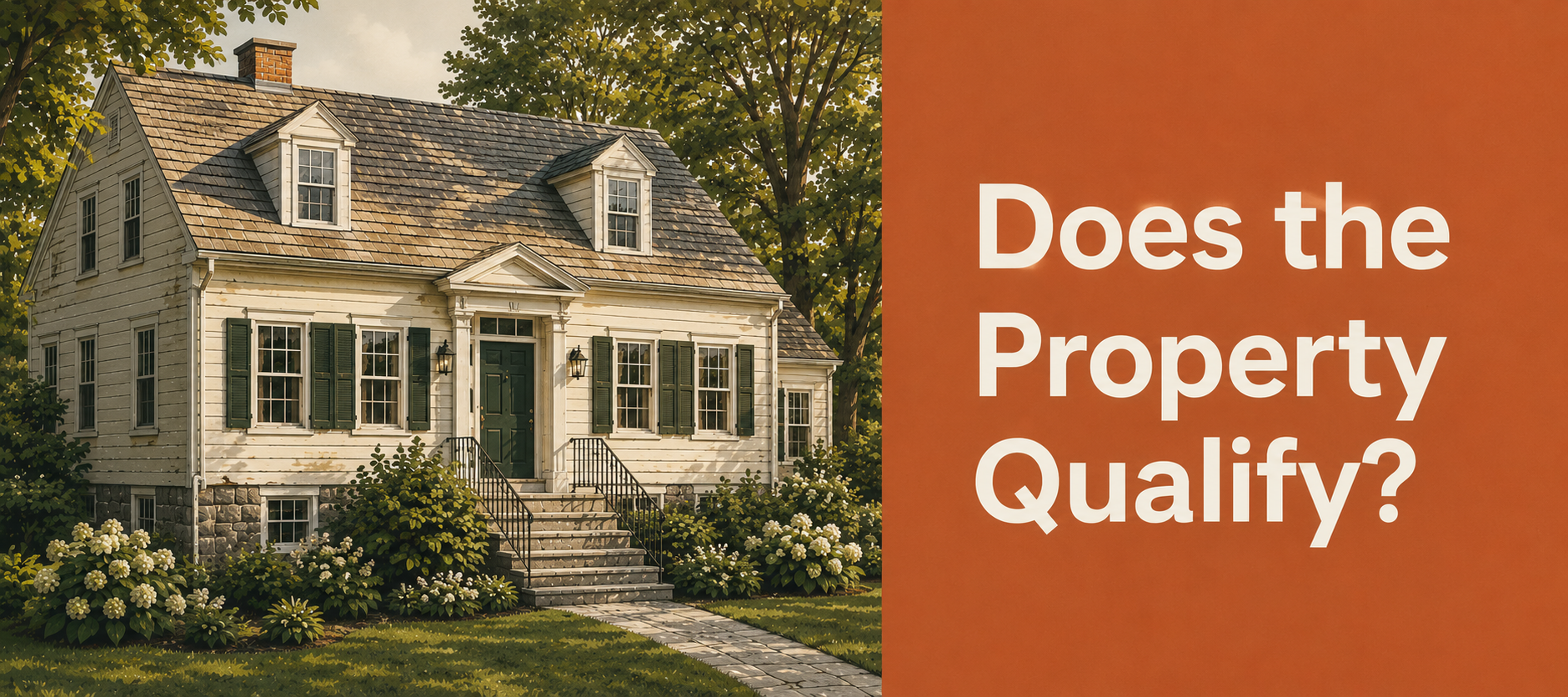
The property itself has to meet FHA's minimum property standards as well.
The home needs to be safe, sound, and structurally secure. Things like exposed wiring, roof damage, foundation issues, or health hazards can flag during the FHA appraisal and hold up the process.
This comes up more often with older rural properties in Vermont and New Hampshire than in other markets. It is worth knowing before you fall in love with a place.
That said, if the property has issues, it is not always a dealbreaker. The FHA 203k renovation loan is designed specifically for buyers who want to purchase and repair.
If that fits your situation, it is absolutely worth a conversation.
What Else Should You Know About FHA?
FHA requires the home to be your primary residence. It is not available for investment properties or vacation homes.
If that is what you are looking at, there are other loan programs - DSCR and Conventional - that make more sense for your goals.
Mortgage insurance is part of the package. FHA loans carry an upfront mortgage insurance premium and an annual premium built into your monthly payment.
It is a real cost to factor into your budget. For most buyers in NH and VT, the lower credit threshold and small down payment still make FHA the right call.
The numbers usually work out in your favor.
For the rest of the FHA rules, including the 2026 loan limits for your county and what the seller can pay, read the free FHA Loan Guide for NH, VT, and ME.
Frequently Asked Questions
Do I have to be a first-time buyer to get an FHA loan?
No. FHA is open to repeat buyers too.
The rule is occupancy. You have to live in the home as your primary residence.
Can I use gift money for my FHA down payment?
Yes. FHA allows the down payment to come from a gift, as long as the donor qualifies, there's a signed gift letter, and the transfer is documented bank to bank.
Family, an employer, or a close friend with a documented relationship can give. The seller and your agent cannot.
How long do I pay mortgage insurance on an FHA loan?
It depends on your down payment.
Under HUD's current rule, a down payment under 10% means the annual premium stays for the life of the loan. With 10% or more down, it lasts 11 years.
The Bottom Line
Qualifying for an FHA loan comes down to four things: your credit score, your debt load, the property condition, and making the home your primary residence. That is the framework.
But here is what the framework does not capture. Every file tells a story, and the story matters more than the numbers alone.
I have seen buyers get turned away by one lender and close with another, not because their situation changed, but because the right eyes finally saw the full picture.
If you have been wondering whether you would qualify, or if you have been told you do not, let's actually look at it together. One conversation can change the direction of a lot.
Ready to Find Out Where You Stand?
Serving Lebanon, Hanover, White River Junction, and the greater Upper Valley region of NH and VT - and all of Maine.
Book a free consultation at GetHelpLending.com
Serving with integrity. Closing with confidence.
Derek Tsakiris | NMLS #1007898 | NEXA Mortgage, LLC NMLS #1660690 | Licensed in NH, VT & ME | Equal Housing